
How Storm Data and Hail Mapping Help Roofing Contractors Win More Jobs
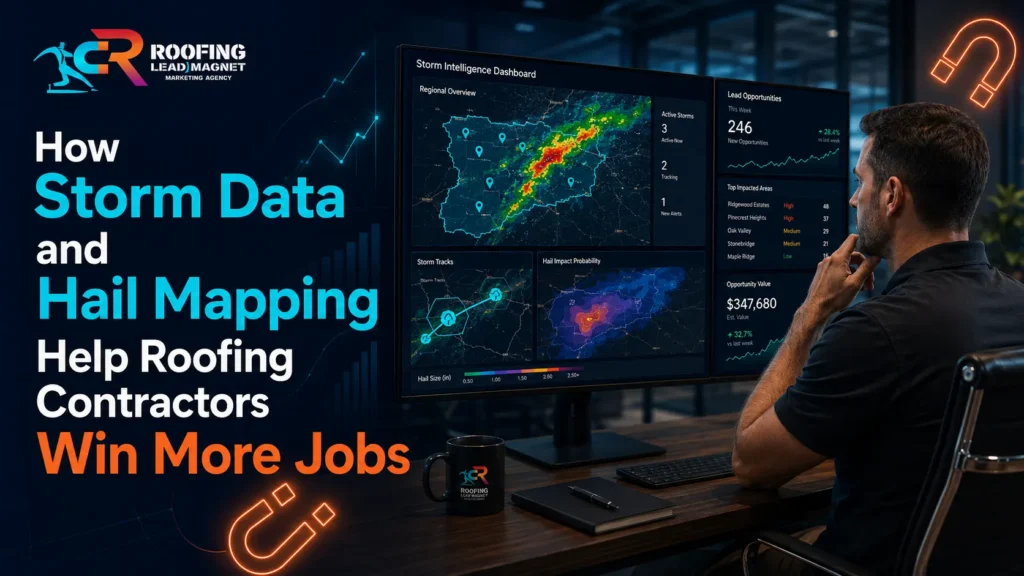
Storms create urgency in the roofing industry.
When hail, wind, or severe weather hits a neighborhood, homeowners begin looking for answers. Some notice damage immediately. Others see dents, missing shingles, leaks, or granules in gutters days later. Many do not know whether they need an inspection until a roofing company educates them.
For roofing contractors, timing and targeting matter.
The companies that win after a storm are not always the biggest. They are often the companies that know where to focus, how to respond quickly, and how to reach homeowners with the right message.
That is where storm data and hail mapping become powerful.
Roofing Lead Magnet Pro uses premium data access, storm data, hail mapping, demographic data, and market targeting to help roofing contractors identify better opportunities and build smarter campaigns.
Why Storm Data Matters
Without data, roofing contractors often chase storms blindly.
They hear about hail in a city, send crews into the area, run broad ads, or start knocking doors without knowing which neighborhoods were truly impacted.
This creates wasted time and wasted budget.
Storm data helps contractors understand:
Where severe weather occurred
How strong the storm was
Which areas may have experienced hail impact
Which neighborhoods are worth targeting
Where roof damage demand is likely to increase
Which homeowners need education quickly
Where sales teams should focus outreach
Instead of guessing, the contractor can act with direction.
What Is Hail Mapping?
Hail mapping uses weather data to identify where hail likely occurred during a storm event.
For roofing contractors, this information helps identify areas where roof, siding, gutter, fascia, soffit, and exterior damage may have occurred.
A good hail mapping strategy helps answer:
Which zip codes were affected?
What size hail was reported?
Where was the storm path strongest?
Which neighborhoods should be prioritized?
Where should ads be launched?
Where should inspection offers be promoted?
This does not replace professional inspection. It helps contractors decide where to focus marketing and outreach.
The Problem With Reacting Too Late
After a major storm, homeowners are contacted quickly.
Competitors start advertising. Door knockers enter the neighborhood. Local searches increase. Social feeds fill with roofing offers. Insurance claim questions rise.
If a roofing company waits too long, the best opportunities may already be booked.
Storm data allows contractors to respond faster. Instead of waiting for homeowners to discover damage on their own, contractors can proactively educate the market with inspection offers, storm damage checklists, and helpful content.
Speed matters, but speed without targeting wastes money. The best strategy combines speed with precision.
Better Targeting Means Better Lead Quality
Not every storm-affected area produces the same kind of lead.
Some neighborhoods may have older roofs. Some may have higher home values. Some may have stronger insurance claim potential. Some may be more responsive to digital ads. Some may need more education before they book.
RLM Pro combines storm intelligence with demographic data and market targeting to help roofing contractors focus on better-fit areas.
This improves campaign performance because the message reaches homeowners more likely to need service.
Storm Campaigns Need the Right Message
After a storm, many roofing companies immediately push “free inspection” messaging.
That can work, but it is not enough by itself.
Homeowners also need education. They may not know what hail damage looks like. They may not know whether to call insurance first. They may not understand that gutters, siding, fascia, soffit, window screens, and exterior components can also be damaged.
A strong storm response campaign should include:
Hail damage warning signs
Wind damage checklist
Insurance claim education
Why inspections matter
How to document damage
Why homeowners should act quickly
What damage can look like from the ground
Why waiting can make damage worse
This type of education builds trust and improves lead quality.
Use Social Media for Storm Authority
Social media is especially useful after storm events.
Roofing companies can post timely updates, damage checklists, inspection reminders, and educational videos. This helps the company appear active, local, and helpful.
RLM Pro’s social media management and RLM Social Pro can support content planning, storm-event post creation, and consistent publishing.
Storm-related social media content can include:
“Hail hit your area?” posts
Damage checklist graphics
Short videos explaining roof bruising
Before-and-after repair examples
Insurance claim process tips
Emergency leak response reminders
Neighborhood-specific storm alerts
Review and trust posts
The goal is to become the contractor homeowners remember when they need help.
Connect Storm Data to Paid Ads
Storm data becomes even more powerful when connected to paid advertising.
A contractor can launch campaigns focused on specific zip codes, storm-affected neighborhoods, or service areas. Instead of advertising broadly to everyone, the campaign targets homeowners who are more likely to have storm-related roofing needs.
Ad messaging can be customized around the storm event:
“Hail reported near your neighborhood”
“Schedule a storm damage inspection”
“Check your roof before small damage becomes a leak”
“Wind and hail may have damaged more than your shingles”
When paired with strong landing pages and fast follow-up, these campaigns can generate high-intent leads.
Your Website Must Be Ready Before the Storm
Storm traffic is valuable, but only if the website can convert it.
If a homeowner clicks an ad and lands on a generic homepage, the conversion rate may suffer. A better strategy is to send storm-related traffic to a focused landing page.
A storm damage landing page should include:
Clear headline
Storm damage inspection offer
Service area relevance
Photos or examples of damage
Insurance claim support information
Trust signals and reviews
Simple form
Click-to-call button
Fast mobile loading
Strong CTA
RLM Pro’s website design services help roofing contractors build pages that support lead capture instead of losing traffic.
AI Helps Capture After-Hours Storm Leads
Storm-related leads often come outside normal business hours.
Homeowners may notice leaks at night. They may search after work. They may message a company late in the evening after seeing damage.
If the company does not respond quickly, the lead may go elsewhere.
AI receptionists, AI chatbots, and AI voice agents help roofing contractors capture and qualify inquiries even when the office is closed.
This is especially useful during storm season when call volume can spike quickly.
Storm Data Works Best Inside a Complete System
Storm data alone is not enough.
It needs to connect to:
Lead generation
Paid campaigns
SEO content
Landing pages
Social media posts
Google Business Profile updates
AI follow-up
Review management
Sales team outreach
Cold calling when appropriate
This is why RLM Pro focuses on complete roofing growth systems. Data tells the contractor where opportunity exists. Marketing captures the opportunity. AI and follow-up help convert it.
Win the Storm Before Competitors Do
Roofing contractors who move with data have an advantage.
They can focus faster, message smarter, and reach homeowners when urgency is highest.
Roofing Lead Magnet Pro helps contractors nationwide use storm data, hail mapping, demographic targeting, lead generation, SEO, websites, social media, AI tools, and reputation systems to turn severe weather into organized growth opportunities.
Book a demo today.
Visit roofingleadmagnetpro.com
Call +1 (507) 501-5458
Email info@roofingleadmagnetpro.com
Roofing Lead Magnet Pro
Data-Driven Lead Generation
Serving Roofing Contractors Nationwide — U.S.
